

She wasn’t my sister. At least not by birth.
We weren’t terribly close friends. But were becoming closer as time went by. I liked her. And admired her. And loved her.
She hadn’t been especially sick. But quickly became seriously ill.
She wasn’t that old. It’s funny (not haha-funny; but rather interesting-funny) how my definition of “old” has changed over time.
She held things together for everyone, took care of people, laughed, and loved, and was a treasure to be around.
My sister-in-law, my husband’s sister, passed away November 1, 2019, from an invasive and aggressive, drug-resistant, staph infection. MRSA.

The past week has been emotional and intense, as you might expect. And those who were her husband, mother, daughter, sister, and brother are hurting in ways way beyond what I am feeling.
This post isn’t intended to try and explain what those closer to her than I am are experiencing.
But her death did impact me, too, as I’ve known her for almost 35 years.
So, here are some of my thoughts and feelings, from the outer edge of her inner circle of people.
Shock.
“She didn’t make it.”
Although we knew her condition was serious, her passing came as a shock to us. She seemed to be making small, but real, strides in her recovery. But then, she took a bad “turn for the worse”, and her body was not able to fight off this invader any longer.
“She didn’t make it…” Wait… WHAT??
Disbelief
Our siblings aren’t supposed to die.
At least, not yet.
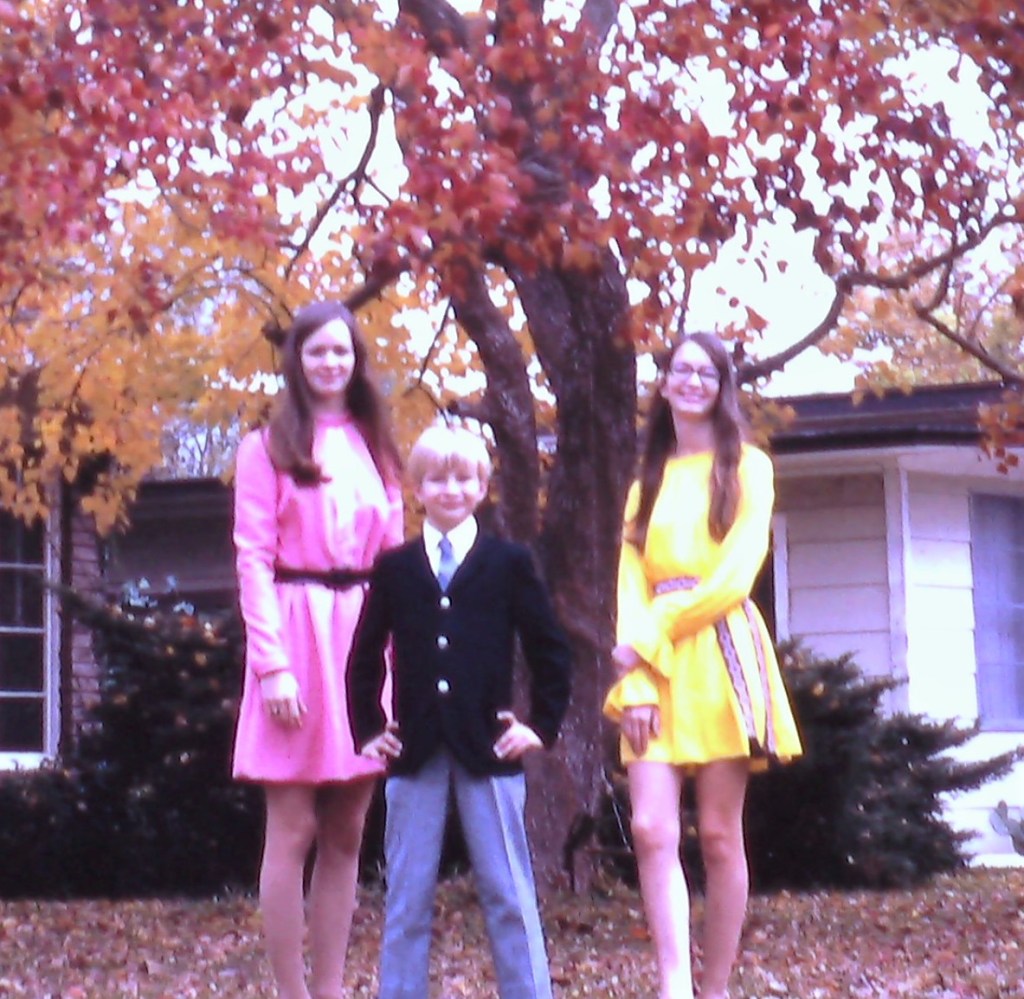
My husband and I are both youngest children in our families of origin. So, if life plays out “like it should” and we all live long, relatively healthy lives until we are old and then die peacefully in our sleep (I know, I know…), this shouldn’t have happened yet.
We have an approved order of things as to how passing from this life to the next should go: grandparents first, parents next, then oldest siblings, then us, and then long after our own passing, our children. And on, and on.
According to our unspoken, but firmly held, approved order of events, it wasn’t my sister-in-law’s turn yet.
And yet, it was.
Fear
It took a minute or two for our brains to make sense of what had just happened.
Then, the realization that our SIBLINGS could die – without our permission, unplanned, and out of order – smacked us in the face.
Enter a whole new level of mortality awareness. I felt fear for my own losses, that haven’t even happened yet.
Grandparents passed? Check
Parents gone? Unfortunately, yes
Siblings? Of course not. Don’t be ridiculous.
The thought of losing one of my 4 siblings – that was something that I could barely stand to consider.

But then…
Sibling loss suddenly became a real thing.
My husband and I both thought of how our daughters would feel, someday, when one of them is no more. We panicked that we’d only had TWO children – when one passes, the other will be left “alone”.

Fear is a liar. It comes flying into our heads, steers us directly into “worst case” mode, and makes it seem like the things we dread the most might just be unsurvivable for us.
So far, you (and I) have survived 100% of the horrible things that we’ve experienced in our lives.
So horrible things ARE survivable.
Unfortunately, fear tries to make us believe otherwise.
Anger
The whole idea of death makes me furious.
Whether it’s losing a beloved pet, hearing of a person I knew in the past who has died, seeing friends grieve their losses, losing my own parents, or seeing my family-by-marriage lose this precious one, death makes me furious.
If I was God, I would have done things differently.
Don’t ask me about where we’d put all those people if no one ever died. I don’t care; we’d figure it out.
Don’t try to explain to me all the reasons that death is necessary. I know those reasons.
Death absolutely sucks.

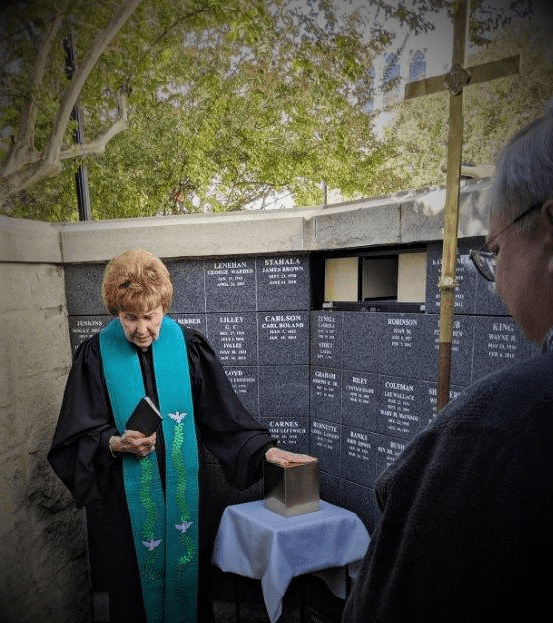
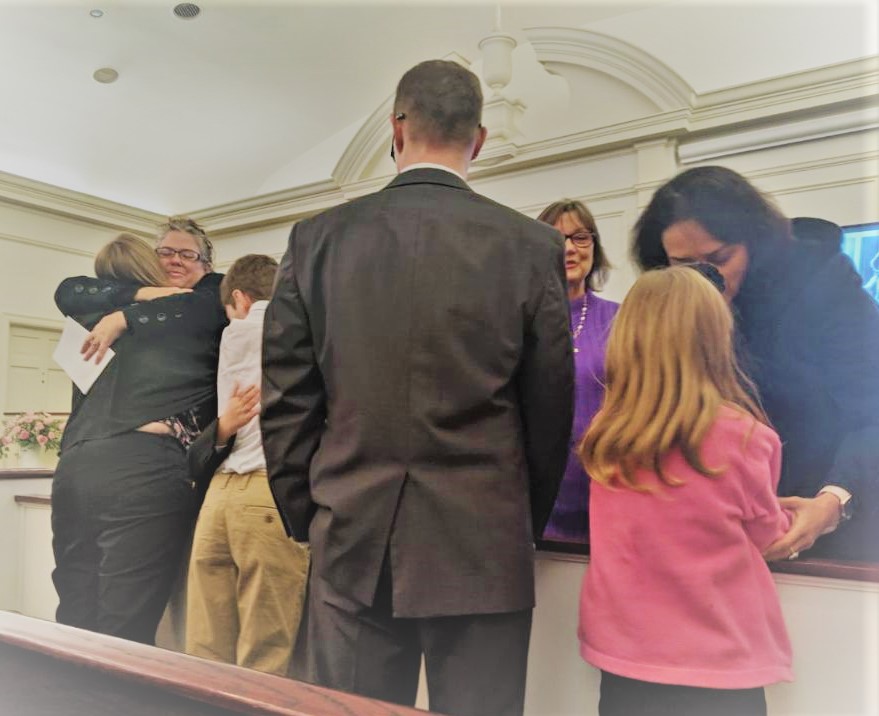
Yesterday, as we laid my niece’s mother to rest in the columbarium at their church, I watched her struggle with the rage she felt at losing her mother too soon. She was angry at God, angry at the unfairness of it all, angry at all the future things that she and her mom would not get to experience together, angry that her children’s grandmother had been stolen from them. This mother and daughter were extremely close, with our niece being the only child that her mother birthed.
My niece losing her mother is not fair.
Death is ridiculous, and it does, indeed, suck.
Please: this is not the time to explain all the reasons for death, especially with regard to our faith in Christ, our belief in God.
We know all that. And we believe all of it.
But right now, there’s some intense anger.
God can handle it.
He’s handled much worse.
Anger does not diminish faith. Our faith gives us the unwavering foundation beneath our feet, even when everything else is falling apart and we are beside ourselves with ridiculous, intense, overwhelming emotions that, at the moment, fly in the face of that firm belief.
Intense anger during grief, and deep faith, can, and do, live together in the same house.
The foundation is still there, even when the believer is torn apart by the storm.

Sadness
I will miss my sister-in-law. She was a good person, a fun person, a smart person, a capable person, a loving person, a loyal person. She was down to earth, loved good food, had a great sense of humor, loved with a quiet but deep passion, and would do anything for anyone.
She was also a University of Texas grad, with burnt orange blood in her veins, and a pharmacist. All of which made her even more special to me.
I will miss her. Her home has been the gathering place for her extended family in later years. She made the plans, took care of the details. Checked on her elderly mother, whose memory is failing now, a little bit more each day.
She was her family’s rock.
Sadness.

Watching her only sister and brother – my husband – grieve tore at my heart. Understanding how much they loved her and will miss her.
Seeing her daughter distraught and a bit lost. But I was so PROUD of her daughter – who had come all the way from Germany with her husband and 2 young children to honor her mother and be with her family.

I lost my mother when I was 38. A little bit older than this daughter with her fresh loss, but still, too young. I understand that unique type of pain that you can’t really describe with words that comes with the loss of a mother. There is no one who can replace your mother.
And to see my husband’s mother, who has lost 2 husbands, her parents, and all of her siblings – grieve, now, the loss of her oldest daughter
It shouldn’t be this way.
But it is.
Again, this is not the time to tell us that “she is in a better place now” (we know that), or “it was God’s will, part of His plan” (maybe it was, maybe it wasn’t; depends on how you view the will of God).
Those things may be true, and you may not know what else to say, but those things are not especially helpful when people are grieving.
A fresh loss involves intense pain and sadness because that person is no longer here with us, now.
If you don’t know what to say when someone is grieving, here are some suggestions:
“I’m so sorry”
“I know you will miss her/him”
“I love you”
“I will miss (your loved one)”
“Tell me about (your loved one)”
“Would you like me to sit with you for a few minutes?”
And for those of us on the receiving end of comments that feel wrong, somehow: let’s do our best to remember that people are uncomfortable with death and don’t often know what to say, or how to say it. They are uncomfortable, but want to say something, because they care, and may be grieving, too. In such a situation, people often will grab onto phrases that seem appropriate to them.
Mourners, it’s ok.
Remember their intentions are good, and those people want to express love and concern.

Try to remember that they are doing the best they can.
New awareness & lack of closure
I come from a family of medically literate people: doctors, nurses, nurse practitioners, pharmacists, EMTs. We tend to talk to medical folks at a pretty detailed level, wanting to know all the nitty gritty of what’s happening to us, or a loved one, when there is illness or disease.
During my mother’s hospitalization leading up to her passing almost 20 years ago, we needed some questions answered, so one of my brothers simply walked confidently into the hall, as a physician would, picked up her chart and scanned it to get the info we were lacking. No one questioned him because he looked like he belonged there, and we found the information we needed.
When my daughter broke both her ulna and radius clean through down near her wrist at age 2, I acted on instinct and reset the arm, properly, right after it happened. The nurse who took her back for x-rays didn’t believe that both bones had been broken and that the arm had initially been crooked because of the break until she saw the x-ray. Then she quickly decided to splint the arm.
Our family is a little different.
And I realized last week that not all families interact with the medical community the way we do. Neither way is right or wrong; they are just different.
The information we got concerning my sister-in-law’s last couple of days did not make good medical sense to me. No one really understood how she acquired MRSA in the first place, or how things progressed from “getting better, breathing on her own, getting ready to move to a rehab facility” to “things took a turn for the worse and she didn’t make it.”
I was full of confusion, frustration, and lack of information, in addition to the sadness. But I also knew that nothing I said or did at that point would bring her back. Nothing would make whatever had happened, UNhappen.
So, one of the lessons I am learning through the last few weeks is how to find closure and peace in a situation where I don’t have all the answers and information that I feel I need. Because, the truth is, my need for peace and closure is not the most important thing here.
My sister-in-law’s death was not about me.
My job is to respect the needs and desires of those closest to her, and find a way to come to terms with the situation. Regardless of any questions I have, and regardless of how I feel about anything.

And that is an important lesson for me to learn. One I’ve had to learn more than once.
Worthwhile lessons are often hard lessons.
It’s crucial to figure out how to find peace and contentment when life doesn’t seem fair, or make sense.
We feel secure and safe when things add up and make sense. We feel off balance and ill at ease when we have questions or believe things didn’t turn out the way they should have.
And, yet, our dissatisfaction and refusal to find that peace and contentment don’t do anyone any good, least of all ourselves.
Deep Love & Pride
I think the overriding feeling I had the past week, and especially in the last couple of days, was deep love and pride.
I was so proud of how all the close and extended family, and close friends, acted through this sad time. Every single person behaved with concern and respect and appropriateness and maturity. Nobody (that I am aware of) said or did anything that anyone could question or feel slighted by.
Everyone came to together to be there for each other.

From the young grandkids all the way up through more elderly relatives – everyone acted exactly as you would hope people would choose to behave in a time of grief.
And love. Goodness, these last few weeks have reminded me how much I love these people. We all have our shortcomings and our moments of being less than awesome – but these people, who make up my close and extended family – they are the best. I love them dearly.
I loved seeing our daughters wrap their cousin up, emotionally and physically, and help her deal with the loss of her mom. I loved how they were determined to make it work with new jobs and young families and limited finances to be there for their cousin and her family.


I loved seeing my husband minister to his sister and mother and brother-in-law so completely, all while he was grieving as well.

I loved seeing our niece’s husband tenderly comfort his wife and anyone else who needed him, and lend a helping hand in any way he could.

I loved seeing my husband’s surviving sister step up and take on new roles and handle a ton of things the past few weeks – without complaint, with love and care and thoughtfulness and wisdom. I loved seeing how tenderly and patiently she cared for her mother, who had just lost her daughter.

I loved seeing my sister-in-law’s husband, through his own deep grief, be a gracious host and a wise father, while his own health isn’t at 100%.
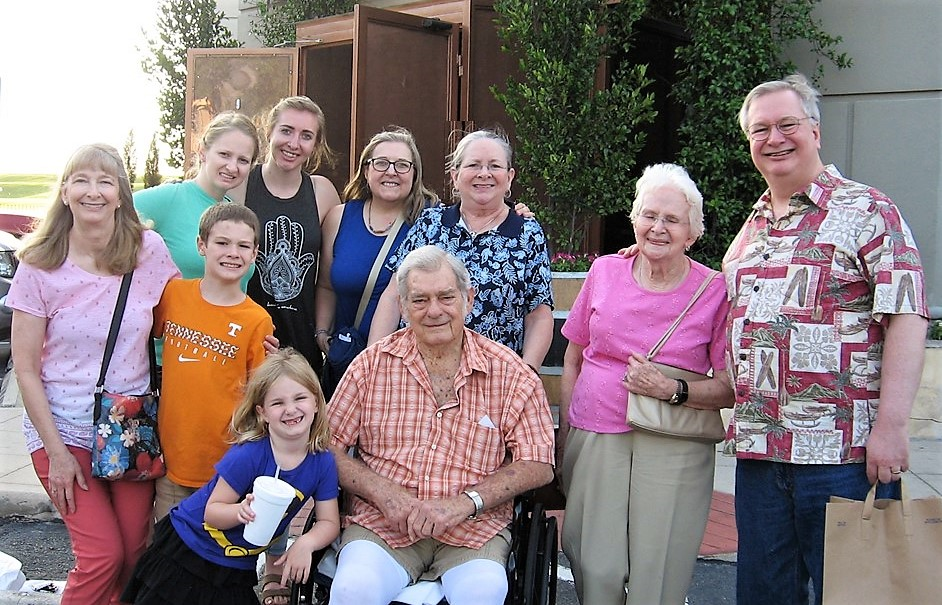
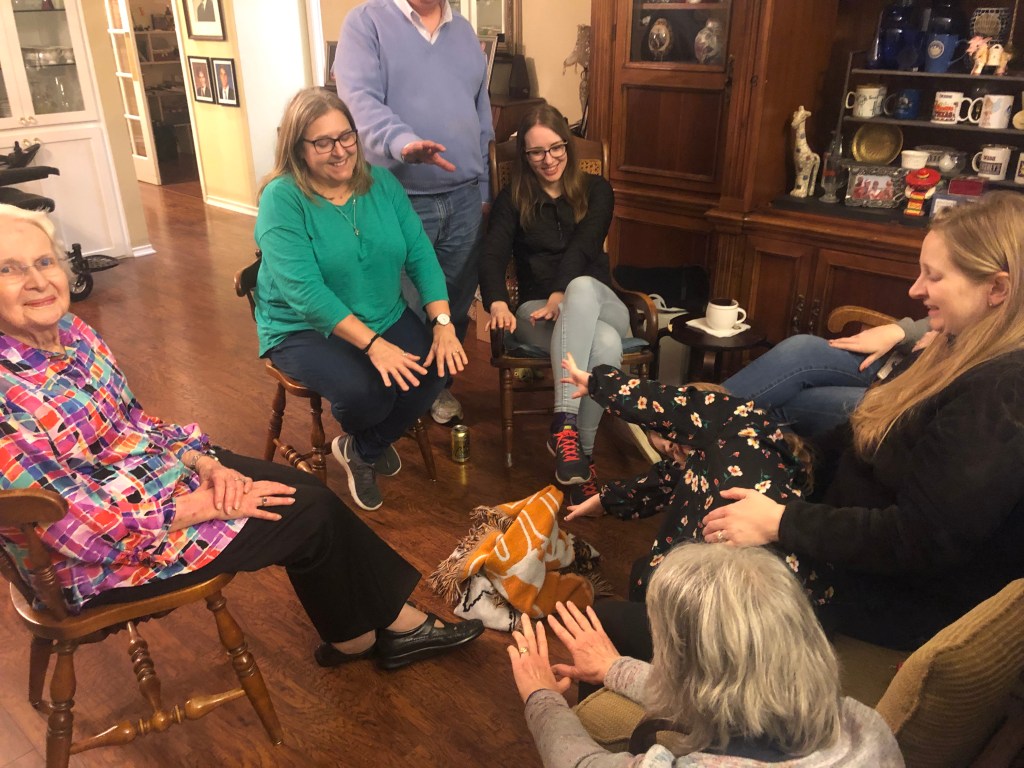
I love seeing people step up in times of need and be exactly who you’d hope they’d be. To watch, as both a participant and observer in the grief, and think, “these are good people, every single one of them..”
Yes, the past few weeks have been tough. But they have also reminded me of some very important and wonderful things about people, and about myself.
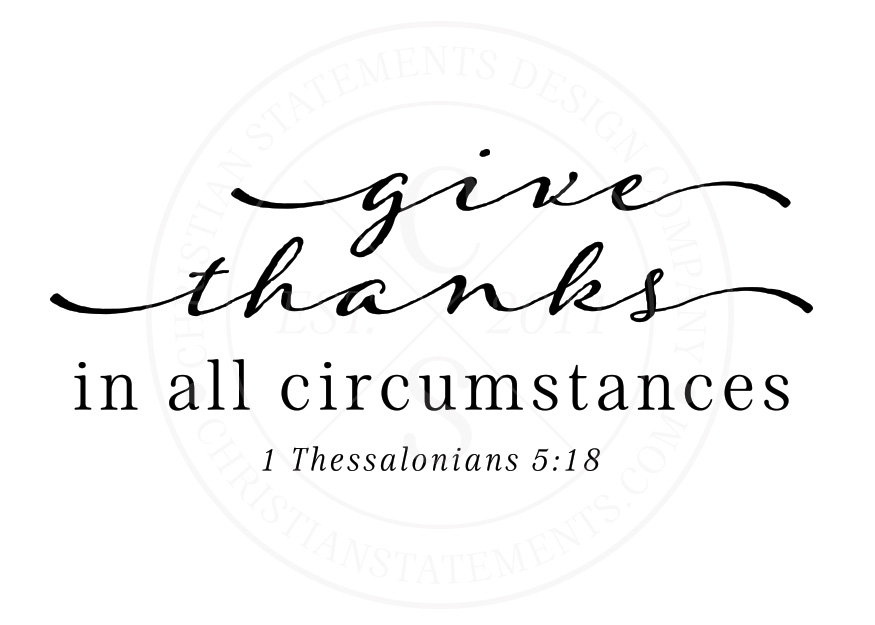
We aren’t expected to be thankful FOR everything that happens in life. But, we can learn to be thankful IN all situations, even the most heart-wrenching ones.
During this month of Thanksgiving, I want to encourage you to look for the blessings, especially in the middle of really tough circumstances. It’s amazing what you’ll find.
Rest in peace, Debbie. I will miss you.

 Peripheral Wisdom
Very beautifully written and heartfelt! ❤️ (I went to High School with Susan.)
LikeLike
This is radically honest about how life is often unfair and confusing. I’m so sorry for you all. I will keep you and your family and your niece in my prayers.
LikeLike