
Has COVID-19 got you full of anxiety and fear?
It certainly has for a lot of people. There are just so any unknowns involved, and life has been changed drastically, very quickly.
COVID-19 has caused some of us to go into a tailspin of anxiety. Our situations ARE changed by this virus, we just don’t yet know to what extent.

But while there are more questions than answers right now, there are some things we can do to combat our fears and anxieties, and not get stuck obsessing or become paralyzed with worry.
I’ll be posting more in the coming days about things you can DO to help yourself and those around you deal with all the emotional and mental angst in the air right now.
For today, here are some tips to help you manage your anxiety and stress when it starts to spiral out of control
1. Close Your Eyes for a Few Minutes

2. Take Some Deep, Cleansing Breaths
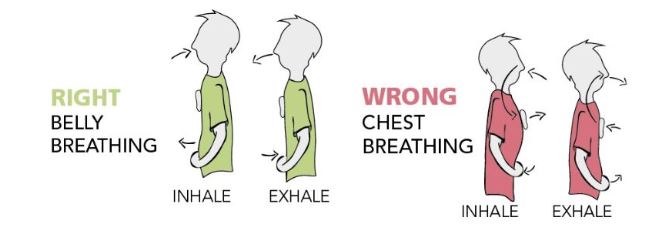
Focusing on your breathing and taking intentional, slow, deep breaths will slow down you heart rate and help your emotions “slow down” too.
- With your eyes closed, breathe in deeply through your nose for 6 to 8 seconds . Let your diaphragm expand before your lungs fully fill. Take your time.
- Hold that breath for a count of 2, then slowly, let the air out through your mouth for a count of 6 to 8. Get rid of the air in your lungs first, then bring your diaphragm back in last.
- As you breathe in, focus on a calming, focus word: “in”, “calm”, “peaceful”.
- As you breathe out, focus on letting go of the stress and anxiety, literally expelling the negativity from yourself as you get rid of that held breath. Words like “stress”, “out”, “fear”, “anxiety” are good examples.
- Some people use color imaging as they breathe in and out. Think of calm/positive colors as you breathe in, and stressful/negative colors as you breathe out. Visualize the color in your mind as you say the color either out loud or to yourself
3. Ground Yourself
When you have a panic/anxiety attack, you generally obsess about all the things you can’t control, many of which are focused on the future, and which probably won’t happen. Sometimes our thoughts can get stuck in that place and we have trouble turning that worry off.
Sometime the anxiety/panic comes out of nowhere when we aren’t even consciously worrying, yet we experience all the same physical and emotional sensations of worrying.
Grounding is a great tool to use during a panic/anxiety attack to bring yourself back to the present moment.
Here’s one way to Ground yourself:
- Find something solid and sturdy to touch – a table, countertop, desk, furniture.
- Start describing, out loud, the physical experience of touching this object. Say things like:
- “I am touching the table”
- “It is solid, not moving, made of wood.”
- “The table is cold to the touch, but becoming warmer as I keep my hand on it”
- “It feels smooth”
3. Still touching the object, remind yourself of the things you know about the present moment.
- “I am here in my own home”
- “I am safe”
- “I may not know all the answers right now, but that is ok”
- “I may feel like I can’t handle this anxiety, but I know that I can and will”
- “I can get help if I need it”
- “It will all be ok”

Another type of grounding is called the 5-4-3-2-1 Method.
- Look around you
- Find 5 things you can SEE
- Find 4 things you can TOUCH
- Find 3 things you can HEAR
- Find 2 things you can SMELL
- Find 1 thing you can TASTE

4. Focus on TODAY
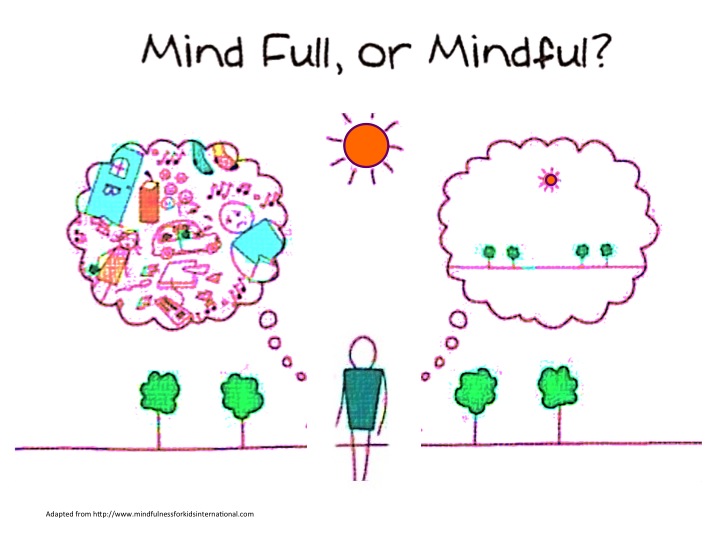
Worry involves hyper-focusing on unpleasant things that have already happened in the past, and/or unwanted things that MIGHT happen in the future.
To combat worry and anxiety, we have to bring our focus back to TODAY, to the present moment.

That doesn’t mean we shouldn’t plan for the future. Staying in the present moments simply means that after you’ve done your due diligence in planning for the future and dealt with the things that are in your control, you make a choice to not mentally obsess about it anymore.
Easier said than done, I know! Baby steps…

Here are some ideas to help you focus on TODAY:
- Get the worries out of your head
Getting your thoughts out of your head and onto a piece of paper in front of your eyes will help greatly in reducing your stress. Worries seem much scarier and overwhelming when they are just rolling around in your head. So get them out! Write down all those upsetting worries and frustrations, and get them out of the vast realm of your thoughts. Some people prefer to type their thoughts out on their computer, but there is just something extra powerful about writing your anxieties out on a piece of paper. Old school. My advice though, is to use whatever method insures that you’ll actually do it!
- Make a list of all the things you are worrying about.
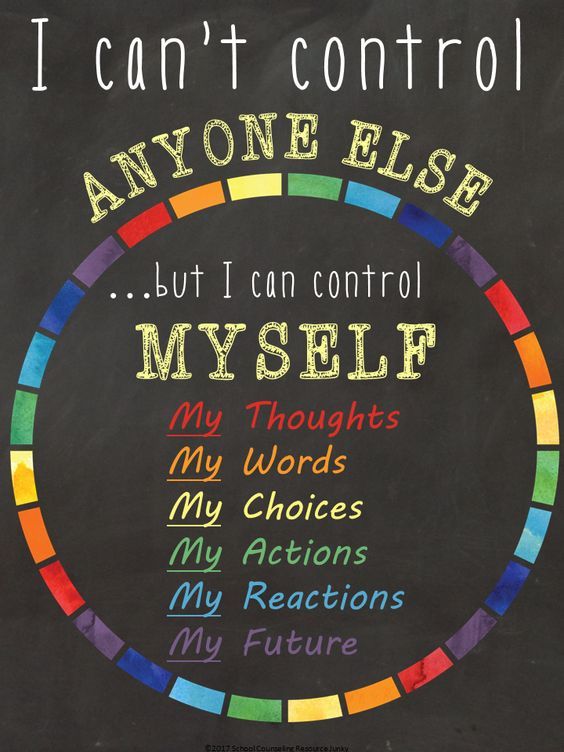
- Determine which worries are in your control and which ones are not in your control and put them on separate lists. I like to use colors – blue or green for “in my control”, red for “out of my control”. Or use a highlighter and highlight the things you CAN control.
- For each item on the list of things you have some control over, jot down steps you can take towards resolving that problem. For example, if your worry is that you might lose your job, list the things you could do to find a new job should that actually happen. If your next worry is that nobody will hire you, list the things you can do to deal with that.
Things you CAN control: your actions, your attitude, your decisions, your preparation, your assumptions.
Things you CAN’T control: someone else’s decisions, someone else’s attitude, what happens to the economy, when the kids go back to school, whether a vaccine if found quickly (what is “quickly” anyway?).
2. When you start to obsessively worry:
- Identify the worry. (I am worried about ________________ )
- Is that worry on the “I can control this” list? Or on the other list?
- If this worry is something you can control, choose to do something that moves you towards resolution. Ask yourself, “what can I do about this TODAY?” Maybe the only thing you can do about this issue TODAY is change the way you think about it, or to remind yourself that you don’t know enough yet to take action.
- If this worry is something that you can’t control, remind yourself of that fact, and replace that worry with a different thought. Find something productive to do instead of worry about this thing. You have to replace the obsessive worry with something else, otherwise the worry will just come right back into your head. We’ll talk about some ways to deal with getting rid of the worry in a future post.
3. Remind yourself that you don’t have to have all the answers right now
Most of us feel we need to have the answers NOW because not having the resolution to our problems feels scary and uncomfortable. But the reality is, we often CAN’T have all the answers RIGHT NOW.

Remind yourself, often, that even though you feel scared and uncertain, those emotions won’t kill you, and the answers will come at some point.
This is a great opportunity to strengthen those patience muscles!

We have to learn to be better at living with uncomfortable emotions and uncertainty, and none of us like that very much.
Remember that we can endure uncomfortable emotions and uncertainty. But we don’t have to like it…
4. Unplug from News, Social Media, etc. for a Bit each Day
I am a news and info junkie. I like knowing what’s going on and feeling like a part of the global community. But a few days ago, I was deep into a project and didn’t have TV or radio on, wasn’t checking social media all the time, etc. I needed to concentrate on what I was doing. And even though the COVID-19 situation was getting worse by the hour, I didn’t FEEL it. I had temporarily unplugged from all of it. At the end of my project that day, I noticed that while my head understood that the world hadn’t righted itself while I was working, my emotions thought everything was ok. I FELT ok.

My advice to you – and myself – is to unplug from it all for a bit every day. The problems won’t magically disappear, but your emotions will get a nice break and you’ll feel calmer. Yay!
5. Name 3 Things that are GOOD about this Moment
This is a trick I used with myself as I was learning to stop excessive worry and work on my anxiety. When you feel your emotions spiraling up into that “place” where the worries start to take control (those of you with anxiety disorders know EXACTLY what I’m talking about), mentally (or out loud) tell yourself to “STOP!”. Then, name 3 specific things that are good or positive about that moment. You can always find 3 things.
Helpful things like: the sun is shining, traffic is good, I smell fresh cut grass (which I like), I don’t feel too sleepy right now, my hot shower felt great, today is the first day of spring (I like spring), I don’t have a headache today.
Not helpful: Well, I MIGHT not die; I had a good childhood; not EVERYONE hates me; if I do end up homeless at least I’m good at making friends…

This action is a subtle yet intentional step towards forming a more positive attitude and strengthening your ability to fight negatively and worry. It also brings you back to TODAY, instead of letting your mind continue to obsess on what has already happened or on what MIGHT happen.
6. Talk to Someone About How You’re Feeling
Whether you are scared, worried, confused, numb, or feel something else entirely, it’s easy to imagine that you are the only one feeling this way and that there’s something wrong with you because of it.
Please believe me when I say that you are definitely not alone in how you are feeling!
A great way to make some sense of your feelings and take comfort in the fact that others are just as effected as you are about the situation is to share your concerns with others.
The thought of sharing your true feelings with another person may in itself be scary and overwhelming. You want to be wise in who you pick to hear your inner feelings; not just any person is worthy of sharing your innermost self. But feeling that fear and sharing anyway, with a trusted, valued other person, is very much worth the angst associated with the sharing.
Talk to your best friend. Or your mom. Or your neighbor. With your minister. Or a counselor.
Maybe find an online community that you can relate to and find support and comfort from.

You’ll come to find that you AREN’T the only one feeling these things, and that knowledge alone will help you feel less stressed, less alone.
My only warning is to make sure your sharing stays productive, and doesn’t turn into a habit of just complaining without taking action. Humans easily fall into the habit of complaining, which isn’t just non-productive; it’s also annoying and can turn your whole attitude negative.

6. Repeat these Steps as Often as Necessary
I wish I could tell you that after you do these things a time or two, all your obsessive worry and fear will go away.
But I can’t tell you that.
It doesn’t work that way.
Fighting anxiety, panic, and fear really IS a battle. You have to fight back at those unproductive feelings and thoughts because they won’t just magically go away. Refuse to be sucked into a constant worry about things that might not happen, that might not even be true.
See if some of the steps that I’ve shared today help you work through those feelings.
There are a lot of unknowns facing all of us right now with the arrival of COVID-19. Most of us have some things that we are, rightly, concerned about. It’s normal to be concerned about concerning things.
I guess you could say we have a great opportunity to practice these skills right now!
‘Somebody had to say that. Sorry, not sorry…

The Bible has great advice for any situation you struggle with. I’ll close today’s post by sharing one of my very favorite passages, which provides perfect advice for combating anxiety and fear.
Philippians 4:8: “Finally, brothers and sisters, whatever is true, whatever is noble, whatever is right, whatever is pure, whatever is lovely, whatever is admirable—if anything is excellent or praiseworthy—think about such things.”

And just above that passage, we find some info on having peace in the middle of trouble.
Philippians 4:6-7: “Do not be anxious about anything, but in every situation, by prayer and petition, with thanksgiving, present your requests to God. And the peace of God, which transcends all understanding, will guard your hearts and your minds in Christ Jesus.”

That kind of peace really DOES transcend understanding. When you’ve experienced it, you realize it’s the only kind of peace that actually works, that actually matters.
If there are particular issues you are struggling with right now that you’d like me to address in a future post, please comment below. I want to be as helpful as possible and address the struggles that everyone is actually experiencing right now.
Until next time, stay healthy out there…
 Peripheral Wisdom