

Cowboys or Seahawks. Red states or blue states. Chocolate or Vanilla. Cats or dogs. Toilet paper over the roll or under. ProLife or ProChoice. Fries or onion rings. God or no God. Chili with beans or without. Creation or Evolution or Both or Neither. Glass half full or half empty.
As long as there are 2 or more people who come into contact with each other, there will be differences of opinion, and at least sometimes, conflict.
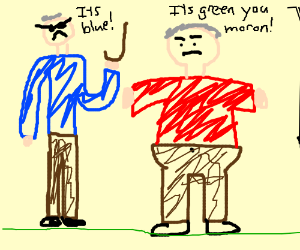
We humans, it seems, are wired for disagreement.
We’ll disagree about pretty much anything. Our conflicts can be angry, frustrating, awkward messes that cause people to avoid each other and become bitter; OR they can be calm, civilized, respectful exchanges of viewpoints that lead to better decisions, deeper understanding, and closer relationships.
What makes the difference doesn’t usually have much to do with the particular issue at hand, but rather how it is handled.
Most of the topics we disagree on AREN’T life or death issues, aren’t things that cut to the core of our moral fiber.
Mostly, our crazy-making conflicts deal with differences of opinion on things that we feel strongly about.
I’ll be honest with you.
I like to have things my way. I prefer when things go according to plan. MY plan. If everyone would just think the way I do, the world would be a much better place.
Seriously, wouldn’t the world run more smoothly if everyone:
- Folded laundry as soon as the dryer stopped
- Loaded the dishwasher efficiently (aka: “my way”)
- Left the house early enough to get to places on time
- Took out the trash when the waste basket was full
- Listened to each other respectfully
- Walked the dog in the morning (before it got too hot)
- Did their homework BEFORE dinner, not after
- Cut sandwiches diagonally, not horizontally
- Slept without snoring
- Waited patiently in line.
Now, having lived for a number of years, I’ve come across a time or two when somebody else didn’t want me to have things my way, because they wanted things their way.
So – I had a situation on my hands. What to do? What to do??

I want one thing, they want the opposite thing.
Unless you live totally isolated and have no contact with any other humans, you are going to encounter MANY situations where there is conflict.
Conflict can impact us in a number of ways. It can cause us to think mean thoughts about others. It can make us angry. It can make us feel vulnerable or frustrated.
It can confuse us because we can’t figure out WHY that other person thinks the way they do. We believe our way is RIGHT and theirs is wrong. Otherwise, we’d have a DIFFERENT view, right??
And we get even more frustrated when we explain why we feel like we do, and they STILL hold on to their viewpoint.
Other people are so stubborn!

Addressing the issue with the other person can feel intimidating, because, at the heart of things, we want to be accepted. We want to be LIKED, and disagreement FEELS like rejection. Our instincts may cause us to shut down when someone whose opinion is important to us disagrees with our view. Even those people who seem to thrive on conflict – butting heads over every little disagreement – are afraid of something. Afraid of looking stupid, or being wrong. Afraid of “losing”, of losing face, of not getting what they want.

Think for a minute about the best friend you ever had. The person you would trust with your life and your innermost secrets.
Did you and that person see eye to eye on everything?
Probably not. But in a healthy relationship, in the very best of “best friend” scenarios, you can feel SAFE even when you disagree because you don’t doubt their unconditional love for you and their commitment to the relationship.
Most of the time, we have conflict with people who DON’T offer that emotional safety we hunger for. And even in many of our close relationships, we aren’t SURE of that love and commitment, and so disagreeing feels very very risky and intimidating. We may feel extremely vulnerable.
We may get irrational because our feelings about rejection and relationship get in the way of logic and resolution.

We let feelings drive our actions, instead of acknowledging the icky feelings and doing what’s helpful and productive and RIGHT – in spite of those feelings.
Successfully dealing with conflict is mostly about the ATTITUDE, words, and actions you choose to exhibit.
Wouldn’t it be awesome if there were productive ways to deal with conflict?
Well, hey, I’m glad you showed up, because I’m about to share those (not so) secrets with you!
Let’s take some time to understand what conflict is and why we deal with it the way we do.
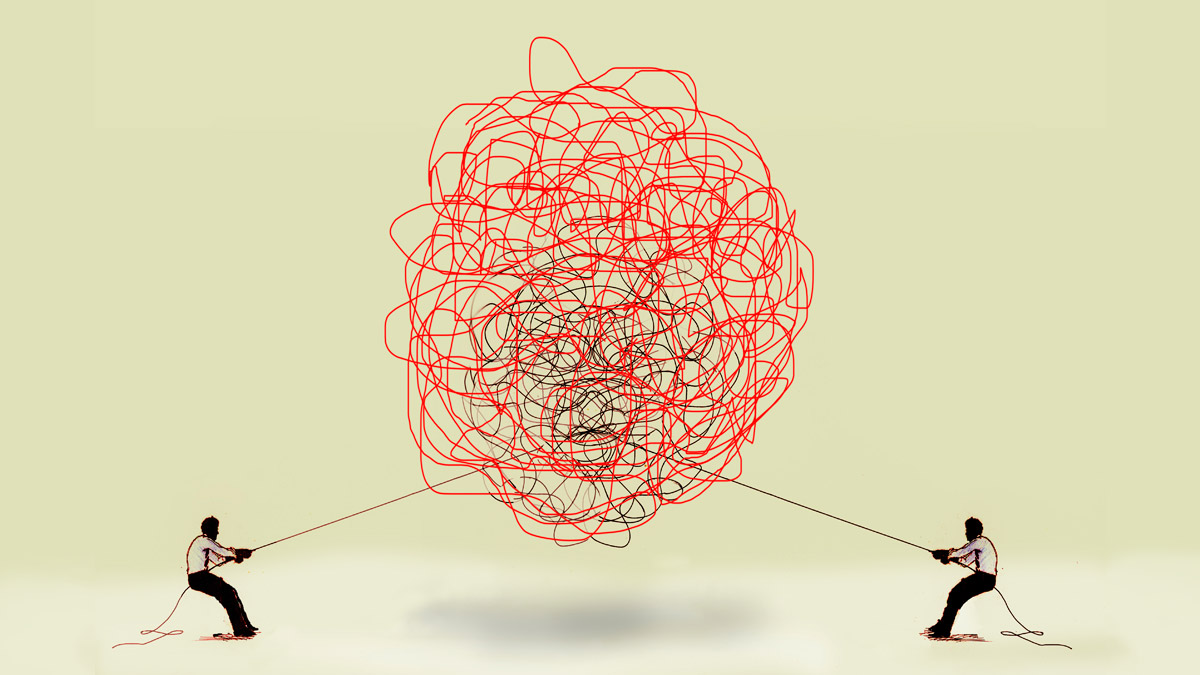
What is a CONFLICT anyway?
I like this definition from the Oxford dictionary.
Conflict is: “A serious incompatibility between two or more opinions, principles, or interests.”
Conflict happens when we strongly disagree with another person about something.
There are several ingredients that create a CONFLICT:
- DISAGREEMENT – This is the obvious one! You have one opinion about something, somebody else has a different opinion, and either the person or the topic or both are important enough to one of both of you that the difference in opinion matters.
- NEEDS – Needs are things that we require, which are essential or very important rather than just desirable, for our well-being. Conflicts arise when we believe someone’s needs are threatened – ours, others, or a group’s needs. Humans often have trouble distinguishing needs from wants.
- PERCEPTIONS – People experience and interpret reality differently. We all have a filter through which we process our world, and no two people will experience an event in precisely the same way. The problem is, we expect others to experience/interpret life in the same way we do, and we become upset/irritated when they do not.
- POWER – How people define and use power is an important ingredient in conflict. There are some folks who seem to thrive on conflict. “Winning” an argument can feel very powerful. Some people seem to create conflict just so they can get the rush of “winning” or exerting power over another person.
- VALUES – Values are principles or standards of behavior; a person’s judgement of what is important in life. Serious conflicts arise when values clash or are not respected. Conflicts also arise when one party refuses to accept the fact that the other party holds something as a value rather than a preference, or holds a different value all together.
- FEELINGS & EMOTIONS – It is next to impossible to be involved in a conflict without feeling SOMETHING, some kind of emotion. However, many people let their feelings and emotions take control during a conflict, leading to an inability to discuss and resolve the issue.
People tend to do one of 3 things when faced with a conflict. See if you can identify which one is your tendency.
In a conflict, people will either:
- They get BIG
- They get SMALL
- They get REAL
1. GETTING BIG

When we get BIG, we try to overpower the other person in some way, usually emotionally, but sometimes physically. We want to win, no matter what, and if we are going to win, then that pretty much means the other person has to lose.
There are only 2 options here: Win (me!) or Lose (you!)
Getting BIG involves seeing conflict as a COMPETITION. In a competition, we are very self focused and care mostly about our own concerns, often at the expense of the other’s well-being.
When there is an attitude of competition, the result is often an aggressive, dogmatic, inflexible and unreasonable approach to conflict resolution, where the goal is to overcome your adversary and win at all costs.
2. GETTING SMALL

People who avoid confrontation like the plague are said to get small. These folks don’t care if they win or lose; they just want the conflict to go away.
These folks see conflict as meaning “I lose AND you lose”!
People who get small in conflict tend to be AVOIDERS. Rather than defend their rights or explain their point of view, they will just wait for the storm to pass. They may appear calm and collected on the outside; inside, however, anger and resentment may be building because there’s never an opportunity to resolve the issues.
Another form of getting SMALL is ACCOMODATING.
These folks don’t totally avoid, but they do go for peace at all costs. Accomodators see it as their responsibility to cool things down and sort things out as soon as possible, even if this means ignoring their personal needs or not having their opinions heard.
Don’t get me wrong – being a peacemaker is not a very good thing.
It only becomes a problem, however, when we strive for peace at all costs, including not addressing the issues that need addressing. Accomodators may look like peacemakers on the surface, but underneath, they harbor resentment, anger, and bitterness.
It’s like being a peacemaker without the “peace”.
3. GETTING REAL

Ding! Ding! Ding! The winner in conflict behavior choices is GETTING REAL!
People who get REAL don’t get too big, or too small. They handle conflict just right! Their goal is to work out the conflict in a reasonable, respectful, productive way while insuring that the relationship remains intact.
When we get REAL, we decide to face the conflict in spite of the fear and apprehension, and work towards a reasonable solution.
When we get REAL, we don’t ignore our needs, or the needs of the other person. Getting Real moves the parties towards a win/win outcome.
One way of Getting Real is to COMPROMISE.

Compromising means each person gives up a little bit of what they would like in the hopes of reaching a mutually satisfactory solution. No one gets everything they want out of the situation, but no one walks away with a total loss either.
Both parties end up a little bit satisfied. Sort of like marrying your sister, except compromise isn’t illegal.
Compromise is often seen as a means for making the solution more tolerable, but not 100% satisfying, for each person.
A better Get Real solution involves COLLABORATION.

Collaboration involves working together with another person for a common purpose. Collaborators use a cooperative approach that gives major importance to the goals of both parties involved as well as to the well-being of the relationship.

Collaborators have to be willing to respect differences and recognize the importance of feelings. They must realize that they are working together to resolve a problem, rather than to change the other’s mind about an opinion.

There is a direct correlation between your ATTITUDE and the OUTCOME of a conflict.
When you’re in a conflict with someone, your attitude will either be DEFENSIVE or SUPPORTIVE.
If you have a DEFENSIVE attitude, you will tend to:

- Judge that other person’s actions as either good or bad
- Believe that only one opinion can be true (mine, obviously)
- Feel offended that the other person questions your viewpoint and/or motive
- Desire to control the interaction
- Possibly act like you don’t care by appearing withdrawn or detached (“whatever”)
- Believe that your opinion/belief is superior to theirs
- Be manipulative (“Remember when I let you have your way last time? Well, …”)
Hopefully I don’t have to point out that the Defensive Attitude is not the one you want to have…
Your other option is to choose to have a SUPPORTIVE attitude. Let me state here that being supportive does not mean you necessarily agree with the other person.
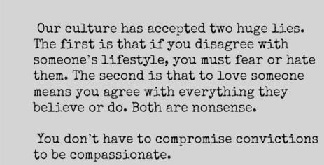
A Supportive attitude:
- Describes actions rather than judges intentions (“You seem to be more discouraged lately” instead of “You’re depressed!”)
- Avoids using absolutes (“always”, “never”)
- Focuses on a problem that can be solved together rather than seeing the other person as the problem (“We see things differently on this; let’s talk about how to tackle this issue.” Not “You never agree with anyone!”)
- Empathizes with the other’s perspective and emotions, even when disagreeing with their view
- Listens and hears the other person’s views
- Communicates their views respectfully, taking ownership of their owns feelings (ie. Does not blame the other person for how they feel, what they think, etc)
Being supportive in the middle of a conflict doesn’t come naturally to most people. We have to choose to learn the tools that will promote a respectful, productive atmosphere of resolution.

(Please excuse the misspelling of “secret” in the image above…)
Most of us know how NOT to act in a conflict, yet we tend to act poorly anyway.

Why do we do that??
Humans have a few instinctive characteristics that lead to poor behavior:
- We are IMPATIENT. We insist on being heard first. After all, if the other person understand my perspective, they’d see things my way. Obviously.
- We don’t LISTEN very well… In fact, most people are terrible listeners. People tend to listen in order to respond rather than to understand, so we get nowhere fast Listening is a very active skill that takes practice and a plan to do well.
- We’re AFRAID. We fear that we will not get our way, that we will lose something we cherish, that we’ll look foolish or lose face. We fear truth … that we might actually be wrong.
- We see things as EITHER/OR, as WIN/LOSE, as THIS/THAT. Today’s culture seems to be really into polarizing our opinions and our arguments and ourselves. If (this), then (that). With no in between. No gray. It is either RIGHT or WRONG. I am right (100%), you are wrong (100%). How often have you heard polarizing, and glaringly false, statements such as “You can’t be a Christian if you voted for/support/agree with Candidate XYZ!” People are more complicated than that. Issues are more complicated than that. YOU are more complicated than that. And so is the other person.
- We think we are ALL THAT. If you’re honest, you’ve probably thought some of these types of things in a disagreement:
- We believe we’re the fountain of wisdom.
- We think we’re right and the other person is wrong.
- We believe the other person is to blame for the problem.
- We can’t stand being told anything.
- We feel entitled to get what we want.
- We believe we’ve been treated unfairly, and deserve to be treated better.
- We believe the other person has poor intentions.
- We believe others are behaving irrationally or illogically.
- We are convinced that God is on our side.
- We think we have a right to righteous indignation.
- We can’t stand to be criticized.

The Root Cause of Conflict
The Bible has something interesting to say about the cause of conflict.
Take a look at James 4:1-3:
”1What causes fights and quarrels among you? Don’t they come from your desires that battle within you? 2 You want something but don’t get it. You kill and covet, but you cannot have what you want. You quarrel and fight. You do not have, because you do not ask God. 3 When you ask, you do not receive, because you ask with wrong motives, that you may spend what you get on your pleasures. “

Sometimes during counseling, people will tell me all about their broken relationships and family/church feuds, and I hear all about what so-and-so did to them, and if I “only knew what that person did”, then I’d understand why they are so angry at them and why they hate them so much.
And I will usually listen, then say something very counselor-ish and wise-sounding like, “Wow, that really is horrible what they did! But we can’t do anything about THEM, can we? You can’t change them, so let’s take a look at your part in this disagreement. Why is this issue so important to you? How did your words and actions make this worse? What can YOU do to make things better? Do you think it might be the right thing to do for YOU to make the first move towards resolving this?”
And usually I get some kind of response like “you’ve got to be kidding, after what they did to me? They’re the ones who need to apologize…” The unspoken (and equally often loudly spoken…) assumption is that the cause of fights and quarrels in life is WHAT THOSE OTHER PEOPLE DID!

(Please know that there should be an APOSTROPHE in the word “else’s” in the image above… I’m seriously going to have to create all my own memes from now on…)
I don’t doubt that those other people DID act horribly.
But that’s not why you’re still feeling the way you’re feeling. In most cases, people still feel this way (angry, resentful, offended, bitter, unforgiving) because they didn’t get what you wanted and thry aren’t through throwing a fit about it yet.
I am obviously not talking about abuse situations, or truly toxic people that you have to deal with. But MOST OF THE TIME our problems are caused by our own poor behaviors and attitudes.

James 4:1-3 is the only passage I know of that gives a succinct account of the origin of human conflict and it says that conflict is caused by wanting something and not getting it. Often, what we don’t get is “our own way”. We don’t get what we want and we get horribly bent out of shape and let our emotions get the best of us.
That’s pretty much spot on, isn’t it?
People will sometimes remind me that “Jesus got angry.” How about “When Jesus threw the money changers out of the temple, and when He cursed the fig tree, and when He gave all of those woes to the Pharisees, He was demonstrating righteous indignation, and I am just showing similar righteous indignation at the wrongs that have been done to me.”

Well, let me say this about that.
First of all, the kinds of things that Jesus got so angry about were the corruption of worship, and the failure to bear fruit, and hypocrisy among the leadership of the people of God.
I have met very few people whose anger is related to those things. It’s usually not an offense against God that makes me angry; it’s an offense against me.
Secondly, Jesus could read people’s hearts, and you and I can’t.
Third, Jesus was perfect, and that made Him qualified to do what He did. You are not Jesus, you are not perfect, and neither am I. While Jesus was perfect and without sin and therefore qualified to lash out in anger at sin, He specifically forbade sinners from throwing stones at other sinners (John 8:7).
There is a place for anger. Anger is usually a signal that something is not right, that something needs to change. Not always, but often, that “something” is within us.
Most of our anger is related to personal inconvenience or frustration. Think about things/people you have been angry with and see if that is not the case.
We get angry when our idols are being toppled. Do you ever think of your desires – the things you want – as being IDOLS? Even your opinion about something you feel strongly about can become an idol (How about: abortion, US border law, guns, whether businesses should have the right to deny service to anyone, and Trump on Twitter, for starters.)
Well, if getting what you want becomes the driving force in your life, or if you become ballistic when someone disagrees with you about a topic that you feel strongly about – then those things are idols.
We often try to cover our idols with a mask of biblical or moral legitimacy – we try to legalize our wants and opinions.
Think about some of the things people get the most riled up about when they disagree. People feel so strongly about their opinions that they create pretend LAWS (often subconsciously) so that they’ll feel they have a stronger case to have things go their way. We will go through some incredible mental gymnastics to rationalize our opinions and desires.
But back to where conflict comes from: the main reason for the conflict that you or I most often have with another person is this – there is something we want that we aren’t getting and we let intense emotions and poor behavior control how we act towards that person.
Whew! That’s a lot of things to think about.
So, what’s a productive, respectful way to deal with conflict?

- PRAY – I’m coming at this whole discussion from a Christian worldview, and because of that, I will say that the most important first step in resolving a conflict is to pray about the situation. Pray for the other person, and for yourself. Ask for wisdom and patience and insight and a right attitude and good word choice. Ask for humility and the ability to understand if YOU are wrong here. Ask God to help you love that other person in spite of your differences. If we start off by asking God to align our will with His as we deal with conflict, we will have a much better chance of doing the right thing – whatever that may be – and reaching a mutually beneficial conclusion.
- BE BRAVE – don’t avoid conflict and confrontation. I’ll admit – I’m an avoider. My tendency is to run from conflict. But I also know that avoiding doesn’t resolve anything, so I am committed to overcoming those tendencies. Know that dealing with conflict is uncomfortable and scary for most people, not just for you.
- Be HONEST – Don’t pretend you’re not upset if you are. If the person you are in conflict with asks you if anything is wrong, and there IS something wrong, please don’t tell them that everything is fine. Instead, if you are having trouble facing the conflict, say something like, “No, something IS bothering me. But I’m not sure how I want to approach this, or what I want to say.” Or “I don’t want to tell you right now. I’m just not ready to talk about it.” Be honest.
- Identify your GOAL – This goes back to the idea of competing versus avoiding versus getting real. Be honest with yourself about what you hope to accomplish by addressing this issue with the other person.
Are you hoping to win, to be right, to get your way? Or is your main goal to preserve the relationship, and to find the best solution for all parties involved? If you don’t know what your goal is, then all you’ll do is argue some more and feel dissatisfied.
A great first goal in conflict resolution is to make sure each of you understands the other’s viewpoint thoroughly.

JOB 1 should be to LISTEN AND UNDERSTAND the other person, even though human nature tries to get you to be obnoxious and demand to be heard first.
5. Identify the REAL ISSUE

Be sure you know exactly what it is you’re disagreeing about! You’d be surprised how often people get so caught up in disagreeing that they’ve forgotten what the point was to begin with.
In counseling it is common knowledge that “the issue isn’t always the issue”, meaning that what’s causing problems on the surface isn’t always the REAL problem that needs addressing.
If you find the same old issues cropping up over and over again, or if it seems that just as soon as one issue’s resolved another shows up, then there’s more going on than meets the eye. And the only thing all these conflicts have in common is YOU. Gulp.
Take a look at what the root problem might be that is leading to so much conflict. Some possibilities:
- External Influences – Are you tired? Hungry? Sick? Working too many hours? Worried about something else? Think about whether you’re being affected by something else – don’t underestimate the power of external circumstances.
- Unresolved Issues – Sometimes people find they’re fighting battles that have a whole lot more to do with the past than the present. Somebody does or says something that triggers your emotions and you react in a way that feels out of proportion to what was said/done. Be a student of your reactions, and if you seem to have some hot buttons that get pushed too often, take a look at what that’s really all about.
- Sensitive Subjects – Sometimes there are topics that, for a variety of reasons, are off-limits to discuss between two particular people. The two of you will probably always disagree about this thing, and have agreed to disagree. If one of you brings up this topic, gently remind them (and yourself) that talking about it won’t get you anywhere.
- Trying to Meet Deeper Needs – People may pick fights over seemingly insignificant things because they have deeper needs that aren’t being met. Disagreements about who puts the most effort into the relationship are often about unfilled needs for respect and worth, for example. Just remember: beneath the surface of an argument that seems silly, there may lurk a much deeper issue, desperate to be let out and looked at. U
Here are a few other random bits of Peripheral Wisdom that may help you navigate conflict:
- Ask yourself if this is a hill that’s worth dying on. Is this battle one you truly want to fight? Are the risks worth the possible benefits? The older I get, the more often the answer to that is “no”.
- Don’t assume other people think/feel the same way you do. And don’t be surprised or offended when they don’t!
- Expect to have occasional disagreements with others. Instead of hoping conflict never happens, plan in advance how you will handle the situation WHEN it occurs. This approach will give you more of a sense of control and calm in the face of conflict.
- Remember that it is CONFLICT that we work to resolve, not DIFFERENCES. We were created with our differences, and those will not necessarily change. We resolve the conflict that our differences bring about.
- Remember, you are not any BETTER than the other person, you are simply DIFFERENT. Remind yourself that the other person’s thoughts and feelings are just as legitimate as yours, even if yours are the polar opposite.
- Don’t assume you know what the other person is thinking. Ask. Don’t assume they know what you are thinking. Speak up. We do too much assuming and not enough clarifying.
- Assume good intentions, unless and until you have clear reason to believe otherwise. “I just know” is not a good reason. Assuming the best will put you in more of a cooperative frame of mind and will help your attitude, which will in turn, help THEIR attitude. I understand that some people DON’T have good intentions, but if your goal is to resolve the disagreement productively, giving them the benefit of the doubt is in everyone’s interests. And for what it’s worth, YOU might be the one with the bad intentions.
- Apologize if you need to. Accept their apology if they offer one and don’t decide that they don’t mean it when they apologize. Work towards forgiveness. If someone offers an apology, please don’t say “You don’t really mean that! You aren’t the least bit sorry!” Just accept the apology at face value, and choose to assume that they did mean it. Telling them they don’t really mean it will just lead to MORE conflict.
- Pretty much all of this is about getting over yourself. The world doesn’t revolve around you. We already know that, but sometimes we wish it would! You might just be wrong about this issue – don’t assume the other person is automatically wrong. Go into this with an open mind, open heart, open eyes, and open ears. Notice, I didn’t say “open MOUTH”.
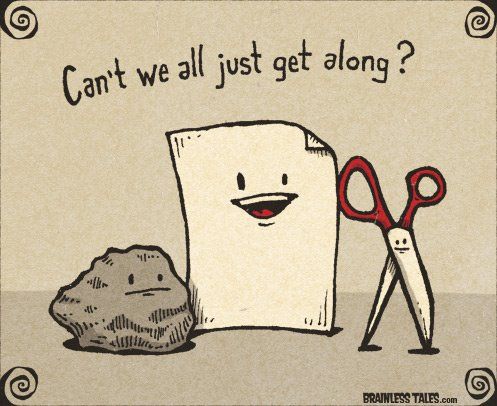
Conflict – it’s something we all face in life, but no one really teaches us what to do with it. It’s uncomfortable, no doubt about it. But you CAN learn to deal with it more productively and respectfully, and preserve precious relationships in the process.
Wow that was a ton of info! Next time, I’ll share tips on how to LISTEN SO PEOPLE WILL TALK and TALK SO PEOPLE WILL LISTEN.
 Peripheral Wisdom
One thought on “How To Disagree Without Being (Too) Disagreeable”