

For the record, I think New Year’s Resolutions are not just a good idea, but a vital part of living a purposeful life. Many people think making resolutions is, at best, a nice little archaic exercise that you should stop doing when you hit your teens; and at worst, a silly waste of time that sets you up for failure.
I have a different take on resolutions. ![21646_10151308517575949_467860999_n[1]](https://peripheralwisdom.com/wp-content/uploads/2015/01/eadef-21646_10151308517575949_467860999_n1.jpg?w=219&h=225)
I know that if we don’t purposefully work to overcome the things that make life difficult for us, those things will not change. Call them resolutions, call them changes, call them whatever you want: it’s not healthy or fulfilling to just keep doing the things you’ve always done that don’t work for you.
So, here are my “Three (4) Things About… New Year’s Resolutions” that will, hopefully, get you to see resolutions from a more positive and achievable angle.
1. You’re Probably Doing it Wrong
The main reason New Year’s Resolutions don’t last for the entirety of the year is that we don’t do them correctly. We’ll list things like “I want to be healthier in 2016”. And while that is absolutely a good thing to aim for, it’s not worded in a way that gives you anything to work with. What does “healthier” mean to you? What are the steps to get there? To be useful (and even remotely attainable), a resolution has to be:
- Reasonable
- Specific
- Controllable
![new-years-resolution-be-more-awesome[1]](https://peripheralwisdom.com/wp-content/uploads/2013/12/c2ff2-new-years-resolution-be-more-awesome1.jpg?w=1100) Reasonable: If you are 80 years old, have never been athletic, have macular degeneration, and use a walker to get around, it is not REASONABLE to resolve that you will compete in the Seniors division playing tennis at Wimbledon next year. It might be reasonable to say that you will find a type of exercise that you can do so that you won’t get so winded when you walk from the living room to the kitchen.
Reasonable: If you are 80 years old, have never been athletic, have macular degeneration, and use a walker to get around, it is not REASONABLE to resolve that you will compete in the Seniors division playing tennis at Wimbledon next year. It might be reasonable to say that you will find a type of exercise that you can do so that you won’t get so winded when you walk from the living room to the kitchen.
Another common, but not all that reasonable, resolution is, “I’m going to work out 6 (or 7) days/week in the coming year”. That’s a super good resolution, but I can tell you, things will pop up that will make 6 times a week reaaaalllllly hard to do.
Is it reasonable?
For most of us, not really. Think about your schedule, your responsibilities, and how committed you want to be to this goal. For most of us, resolving to work out 4 or 5 times per week is much more reasonable, much more likely to happen. We can try to make it to the gym every single day, and some weeks we WILL make it 6 (or even 7!) times. And during those weeks, you’ll feel great because you EXCEEDED your goal of 5 days/week. Your resolution needs to be reasonable; then if you surpass it, you will feel encouraged and even more motivated.
Specific: Lots of people say “I want to lose weight this year!” Which is a great idea if you are carrying around too much weight. But you have to get more specific or come next December you’ll find yourself disappointed at not having lost any weight (and maybe end up gaining a bit). You have a much better chance of succeeding in your weight loss goals by resolving to “lose 1 pound per week beginning January 1 until I have lost 20 pounds total”. 
To be successful, you can start with a general, high level goal (“lose weight”), but then you have to break that goal down into smaller chunks until you have goals that you can actually take specific action on.
Example:
High level goal: Lose weight this year:
Breaking it down:
- Lose a total of 20 pounds this year
- Lose 1 pound per week until I reach my goal.
- Limit myself to 1200 calories per day in order to lose 1 pound per week.
Controllable: Let’s say you are regularly late for work and your boss has said you’ll lose your job if this continues. So you think, “OK, I’m not going to be late anymore!”. That’s a great goal to have, but there’s a problem: you don’t have full control over all the factors that come into play in the transportation arena.

For example, you might leave your house with plenty of time to make it to work, but there’s a wreck, and you lose 30 minutes. If you ride in a carpool, another rider might be late. Or if you drive yourself, you could have a flat tire. Stuff can still happen, even when you do everything right.
You can (and should) still resolve to “be on time in 2016”, but your FOCUS has to be on the things you can control.

Most people who are chronically late have some habits that contribute to their tardiness, even if they don’t like to admit it: staying up too late, sleeping in too long, being unorganized, scheduling too many things too close together (no buffer), addicted to the attention of being late, etc.
To improve your On Time track record, you need to focus on things like:
- Go to bed by 11 PM
- Set my alarm 15 minutes earlier than usual and GET UP when it goes off
- Set out my work clothes the night before
- Give myself 15 minutes of “buffer time” in my commute just in case something goes wrong
These items are all realistic, specific, and controllable.
In addition to those controllable things, you can always HOPE that there’s no wreck, and that traffic moves along nicely, and that your tires stay inflated – but those things are mostly out of your control.
Another common resolution is to “get along better with my family”. Again, that’s a great thing to work on. But you have to make sure you focus on what YOU can control, and “getting along” involves some effort on the part of the other person/people too.
 In case you haven’t figured this out by now, you can’t totally control those other people. And the harder you try to control them, the more it won’t work.
By all means, resolve to get along better with the folks you live with, but be sure to focus on things you control, such as:
- Set down my phone/ipad/etc and look them in the eyes when they are talking to me
- Do a better job of listening rather than getting defensive
- Say “I’m sorry” when I’ve hurt someone
- Remember that chores don’t have to be done my way
Resolutions have to be realistic, specific, and controllable to be achievable.

2. You Have to Mean It
If you make resolutions just because everyone else is doing it and you feel pressure to join in, you probably won’t keep them. Getting rid of old habits and forming new ones is hard, and takes time. If your heart is not in it, you won’t do it. You may end up with a nice list of good intentions, but no real improvement.
Only make resolutions that you really want to change, and then give it everything you’ve got.
Which leads us to number 3:
 3. Start with a Max of 3 Resolutions
I know – you have SO MANY things you’d like to work on next year. But, as I said in my last post, people can only really focus on about 3 things at a time. If you try to hold more than 3 new ideas in your head at once, you will likely not accomplish any of them because there is simply TOO MUCH. We humans resist change, even good change. So 3 changes at any one time is about all we can realistically address.
![repentance_724_482_80[1]](https://peripheralwisdom.com/wp-content/uploads/2013/12/e10b2-repentance_724_482_801.jpg?w=1100) Go ahead and make your list of all the things you want to do differently in 2016. Now, pick the top 3, the three that mean the most to you, and start with those.
Go ahead and make your list of all the things you want to do differently in 2016. Now, pick the top 3, the three that mean the most to you, and start with those.
4. BONUS: Resolutions Aren’t Just for the New Year
Another problem with how we t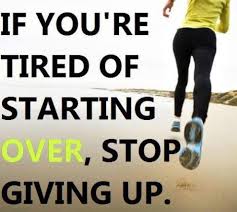 ypically approach New Year’s Resolutions is that we do great for a few weeks, then we slip up, feel like we failed, and give up.
Let me tell you a secret – you are going to mess us in keeping your resolutions.
That’s just the way it is.
No matter how steadfast your resolve it, you are still human. So you need a plan for when you DO mess up – what will you do? – because you won’t be able to keep them perfectly. 
I recommend a monthly, or weekly, review of those top 3 resolutions. See how it’s going. Were those resolutions reasonable, specific, and controllable enough? Or do you need to tweak them and move forward from here?
![preview[1]](https://peripheralwisdom.com/wp-content/uploads/2014/02/aaab6-preview1.png?w=1100)
Don’t get discouraged when you slip up. Just pick yourself up, accept that you are human and sometimes weak (or tired, or lazy, or sick, or really busy, or just have a bad attitude that day), and start again.
 If you really want to lose those 20 pounds, but spent the weekend in a food coma, then re-resolve to get back on track.
And don’t beat yourself up about the slip-up.
It happened; you can’t go back and unhappen it.
Every day is a new day to get back on track, to stick to it better than the day before. Just like God’s mercies are new “every morning”, so should your resolve be new every day.
 Resolution success involves determination, perseverance, and grace for when you mess up.
I hope there are some things you resolve to do better in 2016. I know I have some weaknesses I want to focus on and overcome. And I hope that you will approach resolutions as a long distance run rather than a mad dash until you hit a pothole.
You can do this! Think of who you want to be, and move towards that future you.
Until next time, be purposeful, and keep your eyes looking forward.
Rebecca
 Peripheral Wisdom